Hard water contains minerals like calcium and magnesium that react with your soap and shampoo, leaving behind residue on your skin and hair instead of actually cleaning you.
Around 85% of homes deal with hard water. This means millions of people are bathing in water that makes it harder to get truly clean. There are several ways to improve your bathing experience, from simple home remedies to long-term solutions that can make a real difference for your skin and hair.
What Is Hard Water and Why Does It Matter for Bathing?
Water hardness refers to the amount of dissolved minerals in your water, mainly calcium and magnesium. These minerals affect how water feels on your skin and how well soap works when you shower or bathe.
Defining Hard Water vs. Soft Water
Hard water contains high levels of dissolved minerals. Soft water has low mineral content. When you bathe in hard water, you might notice your skin feels dry or your soap doesn’t lather well. The minerals in hard water react with soap to create a sticky film instead of rich bubbles. Soft water rinses cleanly and leaves less residue on your skin.
Key Minerals: Calcium and Magnesium
Calcium and magnesium are the main minerals that make water hard. These minerals enter your water as it flows through limestone and chalk deposits in the ground. While they aren’t harmful to your health, they can leave your skin feeling tight and irritated after bathing.
How Water Hardness Is Measured
Water hardness is measured in grains per gallon (GPG). Water with 0-3 GPG is soft, 3-7 GPG is moderately hard, and anything above 7 GPG is hard.
How Bathing in Hard Water Affects Skin and Hair
Hard water creates a film on your skin and hair that blocks moisture and causes buildup, which leads to dryness, irritation, and various problems that regular rinsing won’t fix.
Soap Scum, Limescale, and Soap Residue
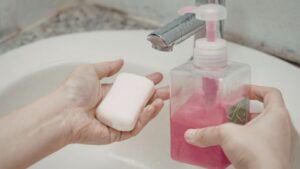
When you bathe in hard water, the calcium and magnesium minerals react with your soap to form lime soap. This creates a sticky film called soap scum that clings to your skin and hair. You’ll notice this residue makes your skin feel tight even after rinsing well.
The same limescale that builds up on your shower doors also settles into your pores and coats your hair. This buildup prevents your cleaning products from working properly and makes it hard to wash away dirt and oils.
Skin Dryness and Irritation
The soap residue left behind strips away your skin’s natural oils. This leads to dry, flaky skin. Your skin may become red, itchy, or develop rashes. The residue also blocks your pores, which can cause breakouts and worsen conditions like eczema.
Hair Problems and Dandruff
Hard water leaves mineral deposits on your hair shaft, making it feel dry and stiff. Your hair may become frizzy, tangled, or break more easily. The buildup on your scalp causes flaking that looks like dandruff.
Solutions for Bathing in Hard Water
You can tackle hard water in your bath through quick fixes like installing filters on your shower and faucets, or setting up a whole-home water softener for complete coverage.
Water Softeners and Water Conditioning
Water softeners provide long-term solutions for your whole home. Ion exchange systems remove hardness minerals by swapping them with sodium ions. These systems install near your water tank and supply soft water to all your fixtures.
Water conditioning through chelation changes how minerals behave without removing them. You still get mineral benefits without the negative effects of hard water.
Shower Filters and Faucet Filters
Shower head filters attach directly to your shower and remove minerals before water reaches your skin. Water filtration options range from whole-house systems to simple shower filters that reduce mineral content at specific points. They’re affordable and easy to install yourself.
Faucet filters work the same way for your bathroom sink. Both options cost less than whole-house systems but only treat water at specific locations.
Other Practical Tips and Home Remedies
Simple home remedies can help reduce hard water’s impact on your skin and hair, while more advanced systems offer complete mineral removal for those seeking long-term solutions.
Bath Additives: Baking Soda, Bath Salts, Vinegar
Adding baking soda to your bathwater helps neutralize pH levels and softens water naturally. Use about half a cup per bath for best results.
Bath salts, especially Epsom salts, bind with hard water minerals and soothe dry skin. They also provide relaxation benefits and improve how soap lathers in your tub.
Vinegar works as a natural rinse after bathing. Mix one cup of apple cider vinegar with water and pour it over your hair to remove mineral buildup. You can also add a cup of white vinegar directly to bathwater.
Chelating Agents and Alternative Approaches
Chelating agents bind to minerals in hard water and prevent them from affecting your skin. Look for shampoos and body washes containing EDTA or citric acid.
Contact Leelongs for Expert Water Solutions
If you are ready to upgrade your hygiene routine and eliminate the effects of hard water, Leelongs offers a comprehensive range of professional Bathing Products. Our filtration technology is engineered to provide superior chlorine defense and multi-vitamin boosts for a refreshing shower experience.
Featured Filtration Range:
- Multi-Stage Shower Filters: Replaceable cartridges like the LL-SF002 are perfect for maintaining water quality in hard water areas.
- Skincare Focused Showerheads: Discover the best-selling SH-30021 for a spa-like experience that promotes healthier skin and hair.
- Filter Accessories: Find necessary refill cartridges and specialized holders like the SH-75030 to keep your system efficient.
Inquire Today: To request our latest product catalogue or for wholesale inquiries, please reach out via our Inquiry Form. Our team is dedicated to helping you find the perfect water quality solution.
Frequently Asked Questions
How can I protect my skin and hair while bathing in hard water?
Consider using a shower filter that reduces calcium and magnesium. These filters attach directly to your showerhead and improve water quality without requiring a whole-house system.
What are the best types of soap to use with hard water to avoid residue?
Liquid body washes generally perform better than bar soaps in hard water because they contain synthetic detergents that do not react with minerals to form soap scum.
Could hard water cause plumbing issues, how to mitigate this?
Yes. Over time, mineral buildup (limescale) can restrict water flow in pipes, reduce the efficiency of water heaters, and cause faucets to leak or clog.
Flush your water heater annually to remove sediment buildup. Hard water deposits settle at the bottom of the tank and reduce efficiency if not removed regularly.
Are there any simple home remedies or treatments for hard water in my shower?
Use a vinegar rinse for your hair after shampooing. Mix one part white vinegar with three parts water and pour it through your hair to remove mineral buildup and restore shine.
Install an inexpensive showerhead filter as a quick fix. These filters cost less than whole-house systems and still provide noticeable improvement in water quality.
What signs should I look for to determine if my home has hard water?
Look for chalky white deposits on faucets, stiff laundry, and a lack of rich lather when using soap or shampoo.