Why Weak Shower Pressure Is a Global Market Problem
Low or unstable shower pressure can appear in gravity-fed systems, older buildings, high-rise apartments, and properties where several fixtures operate simultaneously.
Buyers serving Europe, the Middle East, and Southeast Asia may encounter different combinations of:
- Limited incoming water pressure
- Pressure changes during peak-use periods
- Long or narrow plumbing runs
- Mineral deposits blocking shower nozzles
- Large shower faces that spread limited flow too widely
5 Ways Shower Heads Create a Stronger Spray
A weak shower does not always need a pump. A well-designed high-pressure shower head can make limited flow feel faster, fuller, and more consistent. Here are five proven design approaches, their trade-offs, and a new pressure-responsive solution from Leelongs.
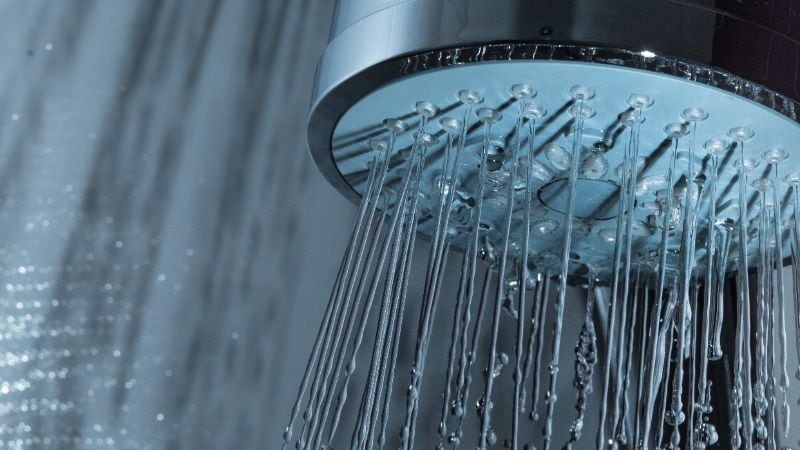
A shower head cannot repair restricted pipes or raise the supply pressure of an entire building. What it can do is control how water exits: its speed, concentration, droplet size, and spray coverage.
1. Use Fewer Spray Holes
How it works: The available water is divided among fewer outlets. More flow passes through each active hole, producing a more concentrated spray.
- Advantage:Simple construction and an immediate improvement in perceived spray force.
- Trade-off:Fewer jets usually mean narrower body coverage.
- Best fit:Compact handheld shower heads, focused rinse modes, and installations with limited flow.
Recommended model: SH-1399K
This approach works when force matters more than broad rainfall coverage. However, reducing the outlet count too far can make the spray feel uneven rather than powerful.
2. Reduce the Spray-Hole Diameter
How it works: Narrower openings form finer, faster jets. The shower head does not raise the incoming pipe pressure, but the higher outlet velocity makes the water feel stronger.
- Advantage:Creates an energetic spray without adding a powered booster.
- Trade-off:Very small holes can collect scale and may feel sharp when the incoming pressure is already high.
- Best fit:Low- or moderately low-pressure homes that still need good rinsing performance.
Recommended model: SH-2959
Diameter must be balanced with outlet count. Many tiny holes may spread the available flow too widely, while too few can reduce comfort and coverage.
3. Use a Stainless Steel Shower Faceplate
How it works: A stainless steel shower faceplate uses closely spaced micro-holes, often around 0.3–0.4 mm, to form fine and visually consistent water lines.
- Advantage:Produces a dense, straight spray from a slim and modern face design.
- Trade-off:The micro-holes need regular descaling in hard-water markets.
- Best fit:Fine-jet, water-saving, and visually distinctive shower head collections.
Recommended model: SH-30021
The steel material alone does not create higher pressure. Performance comes from the precision, distribution, and total open area of the holes.
4. Add Air-Injection Technology
How it works: Internal air channels draw air into the water before it leaves the shower head. This changes droplet formation and creates a fuller spray sensation.
- Advantage:Provides broad, comfortable coverage without relying entirely on sharp micro-jets.
- Trade-off:Results depend on the air-channel design and the available inlet conditions.
- Best fit:Hotels, residential projects, water-efficient ranges, and comfort-led shower experiences.
Air injection is useful when buyers want the shower to feel substantial but not aggressive. It can also complement adjustable rain, massage, and mixed spray modes.
5. Let Silicone Nozzles Respond to Water Pressure
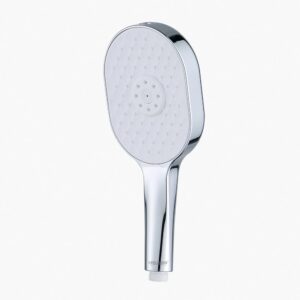
How it works: Traditional outlets remain fixed at every pressure level. Leelongs SH-20045 uses flexible silicone nozzle pins designed to change shape as the incoming water pressure changes.
- Advantage:The outlet structure adapts instead of relying on one fixed hole geometry.
- Pressure protection:Flexible nozzle movement helps release localized stress, supporting a more burst-resistant structure.
- Cleaning benefit:Users can rub or flex the silicone surface to loosen deposits around the outlets.
- Durability:The silicone pins are designed to recover their working shape after repeated movement.
- Best fit:Buildings and markets where shower pressure varies by floor, time of day, or installation.
SH-20045 therefore approaches pressure boosting differently. Rather than making every outlet permanently smaller, it uses a flexible structure to manage changing water conditions.
Which High-Pressure Shower Head Design Fits Your Market?
Buyers serving Europe, the Middle East, and Southeast Asia may face different combinations of low supply pressure, high-rise plumbing, hard water, and peak-time fluctuations.
| Application condition | Recommended approach | Reason |
| Consistently low flow | Fewer or smaller outlets | Concentrates limited water into stronger jets |
| Frequently changing pressure | SH-20045 flexible silicone nozzles | Allows the outlet geometry to respond |
| Hard-water area | Rub-clean silicone outlets | Makes surface deposits easier to remove |
| Comfort-focused hotel or residence | Air injection | Creates fuller, softer droplets |
| Water-saving or fine-spray range | Precision micro-hole plate | Delivers controlled, visually uniform jets |
| Already-high inlet pressure | Wider or adjustable spray modes | Avoids an excessively sharp spray |
If several fixtures have weak flow, the problem may sit outside the shower head. Check valves, pipe restrictions, leaks, and the building supply before changing products. Our guide to low water pressure in showers helps separate shower-head issues from plumbing problems.
Once the inlet conditions are clear, we can match the outlet structure, spray pattern, material, and maintenance requirements to the intended market. You can also explore our current shower product range.
FAQs about High-Pressure Shower Heads
Do high-pressure shower heads increase pipe pressure?
Usually, no. They improve the way available water leaves the spray face. Severe whole-building pressure problems may still require plumbing work or a booster pump.
Are smaller holes always better for low water pressure?
No. Smaller holes can create faster jets, but excessive restriction may reduce coverage, collect scale, or feel uncomfortable. Hole size and outlet count must be designed together.
Which design is best for unstable water pressure?
A pressure-responsive structure such as SH-20045 is designed for changing inlet conditions. Its flexible silicone nozzle pins adapt instead of remaining completely rigid.
Do high-pressure shower heads use more water?
Not necessarily. Spray sensation and water consumption are different. Actual use depends on the rated flow and shower duration, so every model should match local flow requirements.
How can buyers prevent pressure loss from limescale?
Choose accessible, rub-clean outlets and match the design to local water hardness. Smaller fixed holes generally need more attention than flexible silicone nozzles.
Your Trusted Shower Head Supplier
We design and manufacture shower heads for different pressure levels, water conditions, and project requirements. To select the right pressure-boosting structure for your market, contact us for a product recommendation.