
A dual shower head system combines two water outlets—usually a fixed or rain head plus a handheld shower. For buyers, the right choice depends on the installation format, diverter logic, available flow, connector standard and service plan, not simply the number of spray modes.
Quick Answer: Match the System to the Project
Use a shower-arm combo for fast retail retrofits, an exposed shower column for visible upgrades with adjustable positioning, or a concealed two-outlet system for new construction and premium renovations.
Before requesting a quotation, decide whether the outlets must run separately, simultaneously or both. That decision affects the diverter, valve, flow testing and the experience users will receive when both heads are open.
- Retail replacement: prioritize simple installation, manageable weight and clear instructions.
- Hotel or apartment project: prioritize standardized rough-ins, stable switching and replaceable parts.
- Premium bathroom range: prioritize finish matching, valve integration and complete-system testing.
How a Dual Shower Head System Works
Water first passes through a mixing or control valve. A diverter then directs it to the fixed head, the handheld outlet or both outlets when the product is designed for shared operation.
The handheld section also needs a hose, holder or slide bar, washers and compatible connectors. A rain shower head may connect to the same shower arm, an exposed column or a separate in-wall outlet.
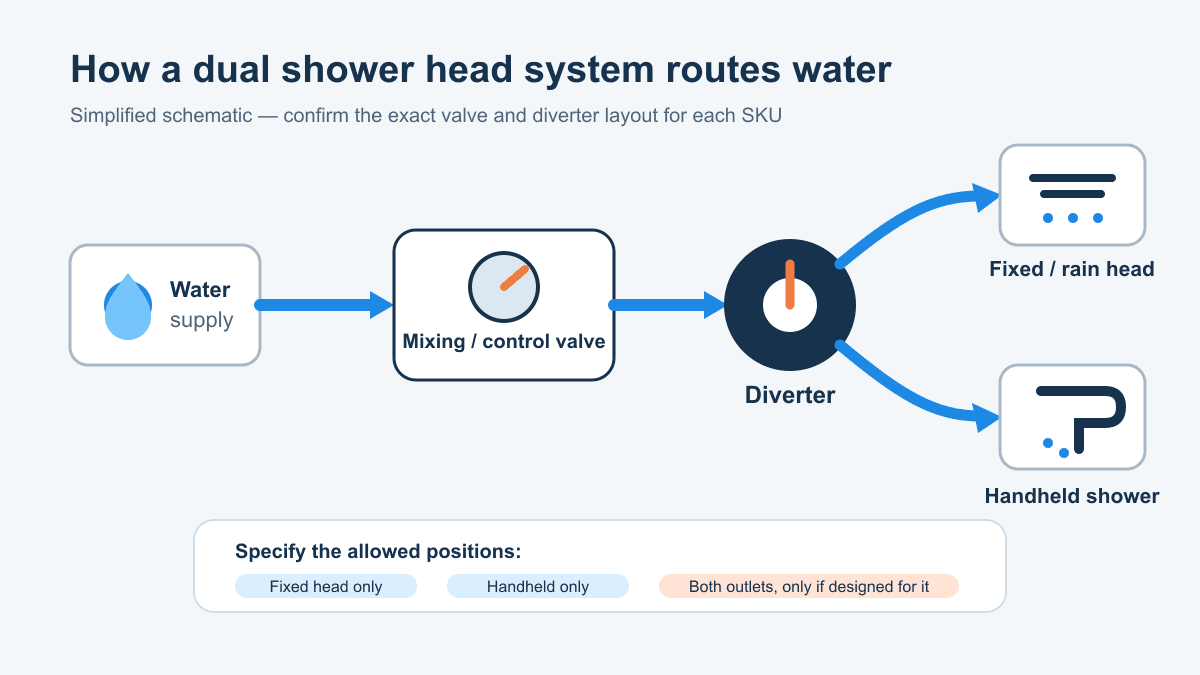
“Dual” describes the two outlets, but not the operating logic. Some systems switch between heads; others add a third diverter position for simultaneous use. Buyers should write the required positions into the specification.
Three Common Dual Shower Head Configurations
| Configuration | Installation scope | Best fit | Main buyer checks |
| Shower-arm combo | Replaces or adds to an existing shower-arm outlet | E-commerce, retail and light renovation | Assembly weight, arm clearance, holder access and thread compatibility |
| Exposed column or rail | Wall-mounted system with visible pipework | Hotels, apartments and bathroom upgrades | Mounting centers, height range, hose reach and spare cartridges |
| Concealed two-outlet system | Valve and waterway are installed behind the wall | New construction and premium renovation | Rough-in depth, service access, valve capacity and trim compatibility |
A nested two-in-one head is another compact variation. The handheld docks inside or beside the fixed spray face, saving space but making docking strength and one-handed removal important sample checks.
Can Both Shower Heads Run at Once?
Only if the diverter provides a shared position and the complete product is designed for it. A two-way diverter normally selects one outlet; a three-position design may offer fixed, handheld and shared modes. Port count alone does not prove the available operating positions.
When both outlets run, the available water is divided. The plumbing pressure has not necessarily changed, but each spray can feel softer. Face size, nozzle geometry, valve resistance and supply conditions all influence the result.
Ask the supplier to test every permitted mode at agreed inlet pressures. Record individual and combined flow rather than accepting a general “high pressure” claim.
Flow Rate and Destination Requirements
In the United States, the current federal maximum for a showerhead is 2.5 GPM at 80 psi under 10 CFR 430.32(p). State, local, project and certification requirements may be stricter.
A dual system needs configuration-specific review. Confirm whether the rule applies to each outlet, to simultaneous operation or to the complete shower compartment. Do not assume that two compliant components automatically create a compliant system.
Lower flow can also change perceived coverage when water is divided between a large rain plate and a handheld. Approve samples under realistic conditions before finalizing nozzles, restrictors and packaging claims.
What B2B Buyers Should Specify
- System architecture: retrofit combo, nested head, exposed column or concealed set.
- Operating modes: fixed only, handheld only and whether simultaneous flow is allowed.
- Flow conditions: target rates, test pressures and limits for every selectable mode.
- Connection standard: thread type, inlet spacing, rough-in depth and regional adapters.
- Component details: head material, hose length, holder range, valve type and diverter cartridge.
- Finish control: approved color sample, gloss level and cross-component color tolerance.
- Service plan: replaceable seals, cartridges, hoses, holders and illustrated part codes.
- Pack-out: included hardware, washer count, instructions, labeling and spare-parts packaging.
For a live product reference, review this dual shower head system with valve. Use the exact model drawing and approved sample—not a category description—as the final production standard.
Sample Approval and Quality Checks
Inspect switching torque, leakage at every joint, hose kinking, holder retention, head rotation and spray consistency. Cycle the diverter repeatedly and confirm that markings match the outlet that actually operates.
For exposed and concealed systems, check installation dimensions with the contractor before tooling or ordering. For shower-arm combinations, test balance on a representative arm and confirm the handheld remains secure after repeated docking.
Keep the signed sample, flow-control parts, finish standard and packaging specification under one SKU revision. Small substitutions can change flow, appearance or field reliability.
FAQs about Dual Shower Head Systems
Does a dual shower head system reduce water pressure?
It does not automatically reduce supply pressure. However, running both outlets can divide the available flow, making each spray feel gentler. Test the complete system at realistic inlet pressures.
Is a rain shower head with handheld good for hotels?
Yes, when the controls are intuitive, parts are serviceable and flow meets the project requirements. Hotels should also evaluate cleaning access, holder durability and replacement-part availability.
Can a dual shower head be installed without opening the wall?
Many shower-arm combinations and exposed columns can use existing connections. Concealed systems normally require in-wall plumbing, coordinated rough-ins and suitable service access.
What should buyers test before a bulk order?
Test flow in every mode, switching life, leaks, spray pattern, hose flexibility, docking, finish consistency and installation fit. Confirm the exact destination requirements separately.
Build Your Dual Shower Head Range with Leelongs
Leelongs has manufactured shower products since 2001 and supports OEM and ODM development, samples, drawings, custom finishes, packaging and function testing within its capabilities.
Explore our shower set range, then contact Leelongs with your target market, installation type, outlet logic, finish and order requirements.