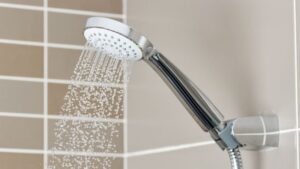
Your best shower head GPM starts with the destination market, not personal preference. Use 1.5–1.8 GPM for stronger efficiency goals, 2.0 GPM for a balanced specification, and 2.5 GPM only where permitted and higher volume is justified.
Quick Comparison: Which Shower Head GPM Fits?
| Rated flow | Approx. L/min | Water in 10 minutes | Useful B2B starting point | Main caution |
| 1.5 GPM | 5.7 L/min | 15 gallons | Projects with aggressive water-saving targets | Validate rinsing, coverage and low-pressure performance |
| 1.8 GPM | 6.8 L/min | 18 gallons | California-oriented and efficiency-led ranges | Flow rate alone does not prove market compliance |
| 2.0 GPM | 7.6 L/min | 20 gallons | Broad efficiency ranges and WaterSense candidates | A 2.0-GPM marking is not WaterSense certification |
| 2.5 GPM | 9.5 L/min | 25 gallons | Higher-volume offers where legally permitted | Restricted in some state and local markets |
What Shower Head GPM Actually Measures
GPM means U.S. gallons per minute. It describes flow volume over time under defined test conditions. It does not directly measure household pressure, spray force or coverage.
Two shower heads with the same rating can feel different. Face diameter, nozzle count, outlet size, spray angle and pressure compensation change how the available water reaches the user.
A shower head cannot create upstream pressure. It can concentrate flow into faster streams, but a restricted valve, narrow hose, clogged screen or low supply still limits delivered water.
1.5 vs 1.8 vs 2.0 vs 2.5 GPM Use Cases
1.5 GPM: Maximum Efficiency
A 1.5 GPM shower head is suitable when a project brief prioritizes low water and hot-water demand. It needs careful spray development because the design has less total volume to distribute.
For hospitality or multi-unit programs, approve the complete fixture at realistic pressure conditions. Do not select 1.5 GPM from a spreadsheet without checking coverage, noise and user handling.
1.8 GPM: Efficient and Market-Aware
A 1.8 GPM shower head is a practical starting point for California-bound ranges. California’s standard applies additional test, marking and multi-nozzle requirements, so the number is only one part of approval.
This rate can work well for handheld and focused spray patterns. Broad rain heads require extra attention to droplet distribution and the amount of water assigned to each outlet.
2.0 GPM: A Balanced Specification
Two GPM sits below the U.S. federal maximum and at the maximum rated flow allowed for a WaterSense-labeled shower head. The exact model must still complete independent certification.
Choose this tier when buyers want measurable efficiency without moving to the lowest-flow SKU. It can support fixed, handheld and rain formats when the spray system is designed around the limit.
2.5 GPM: Higher Volume, Narrower Market Fit
At the federal level, 2.5 GPM remains the maximum at 80 psi. It supplies 25 gallons during ten minutes at rated flow—ten gallons more than a 1.5-GPM model.
Specify it only after checking the sale and installation location. A higher number does not guarantee better pressure, and it increases water plus hot-water demand.
Check Regulations Before Building the SKU
| Requirement | Verified flow point | Buyer implication |
| U.S. federal standard | Maximum 2.5 GPM at 80 psi | National ceiling; stricter state or local rules may apply |
| EPA WaterSense | Rated maximum 2.0 GPM or less | Requires independent certification plus force, coverage and pressure-compensation performance |
| California Title 20 | Maximum 1.8 GPM at 80 psi for covered products manufactured on or after July 1, 2018 | Also review minimum-flow, marking, database and multi-nozzle requirements |
Requirements change by destination and product configuration. Confirm the current rule, test method, certification listing and effective date before quoting or shipping any model.
Why the Same GPM Can Feel Different
- Face size: the same flow spread across a large rain plate may feel gentler than a focused handheld spray.
- Nozzle geometry: outlet diameter, spacing and angle affect velocity, coverage and droplet behavior.
- Pressure compensation: a well-designed control system can reduce variation across changing supply pressures.
- System resistance: valves, cartridges, hoses, filters and diverters can reduce delivered flow.
- Maintenance: scale or debris can distort the pattern even when the original GPM specification was appropriate.
If your project begins with weak flow complaints, use our low shower pressure guide to separate product selection from plumbing problems.
B2B Sample Approval Checklist
- Lock the destination: record every country, state, retailer and project requirement.
- Identify the exact SKU: flow rate, finish and connector suffixes must match the tested sample.
- Test every mode: record flow for each spray setting and permitted outlet combination.
- State the pressure: never report GPM without the applicable flowing-pressure condition.
- Assess user performance: review spray force, coverage, switching, noise and temperature stability.
- Control production: define the flow-control insert, retention method, marking and inspection frequency.
FAQs about Shower Head GPM
Is 1.8 GPM enough for a shower head?
It can be. A properly engineered 1.8-GPM model can provide useful force and coverage. Confirm the fixture type, available pressure and approved sample instead of judging the number alone.
Does higher GPM mean higher water pressure?
No. GPM measures flow, while psi measures pressure. Higher permitted flow may add volume, but nozzle design and the plumbing system determine the resulting spray.
Is every 2.0 GPM shower head WaterSense labeled?
No. Two GPM meets the program’s flow ceiling, but WaterSense also requires independent certification and performance criteria. Verify the exact model in the official product database.
Should buyers offer several GPM versions?
Often yes, when markets have different limits. Treat each version as a controlled SKU with its own insert, marking, sample approval and compliance records.
Develop Your Shower Head Range with Leelongs
We have manufactured shower products since 2001 and support OEM and ODM programs with samples, drawings, custom finishes, packaging and product testing within our capabilities.
Explore our shower head range, then contact us with your destination markets, target GPM, fixture type and test requirements. We can review a practical SKU plan for your RFQ.