Distributors and brand owners are facing a key strategic decision: which manufacturing model best supports their business goals?
Choosing between ODM, OEM, and Private Label affects your cost structure, time to market, and competitive positioning. This article provides a practical comparison of the three models, using filtered shower heads as an example, to help you determine the best path forward.
What Are ODM, OEM, and Private Label?
Each model offers a different level of customization and control.
ODM (Original Design Manufacturer)
ODM is a fully customized solution. The product is developed based on your specifications or drawings, and the manufacturer produces it exclusively for you.
In filtered shower heads, ODM allows full customization of:
- Outer housing design
- Dedicated filtration cartridge system
- Water flow modes
- Swivel ball materials
- Spray panel structure
- Internal components and accessories
Manufacturers can build molds directly from your design, enabling a unique and proprietary product.
OEM (Original Equipment Manufacturer)
OEM is a semi-custom model. You select an existing product and make limited modifications. Shower heads can be produced according to drawings.
Typical OEM customization includes:
- Selecting a base model
- Customized color
- Adding your logo
- Minor functional adjustments
This approach reduces development time while still allowing some brand identity.
Private Label
Private Label is the simplest model. The product is fixed, and only branding elements are customized.
For filtered shower heads:
- Product design remains unchanged
- Packaging is customized
- Instruction manuals are branded
- Labels are applied
This is ideal for quick market entry with minimal complexity.
Key Differences
The following table highlights the core differences across critical business factors:
| Factor | ODM | OEM | Private Label |
| Customization Level | Full customization | Partial customization | No product customization |
| Product Ownership | Fully unique | Shared design base | Standard product |
| Minimum Order Quantity | ~10,000 units | 2,000–5,000 units | ~1,000 units |
| Development Cost | High (mold + samples) | Medium | Low |
| Time to Market | 3–8 months | 1–3 months | 1–4 weeks |
| Market Differentiation | Strong | Moderate | Limited |
Cost Structure Comparison
Cost is often the first consideration for buyers.
| Cost Element | ODM | OEM | Private Label |
| Mold Cost | Required (paid by client) | Not required | Not required |
| Sampling Cost | High | Moderate | Low |
| Unit Cost | Lower at scale | Moderate | Slightly higher per unit |
| Initial Investment | High | Medium | Low |
- ODM requires significant upfront investment, including mold development and engineering validation.
- OEM reduces cost by leveraging existing designs.
- Private Label eliminates development cost entirely, making it ideal for budget-sensitive projects.
Market Differentiation Capability
In a competitive filtered shower head market, differentiation is critical.
| Aspect | ODM | OEM | Private Label |
| Product Design | Exclusive | Semi-exclusive | Standard |
| Filtration System | Custom-developed | Limited changes | Fixed |
| Branding Impact | Strong | Moderate | Weak |
| Competitive Advantage | High | Medium | Low |
With ODM, you can develop proprietary filtration cartridges (e.g., multi-stage filters, vitamin infusion, mineral beads), which can become a key selling point. OEM offers visual differentiation, while Private Label relies mostly on marketing and pricing.
How to Choose the Right Model
Selecting the right model depends on your business strategy, resources, and timeline. Consider the following key questions:
- What is your budget?
- Do you have product designs or technical drawings?
- Do you need an exclusive product design?
- Do you need a proprietary filtration system?
- Are certifications required?
- What is your expected cooperation duration?
- Who owns the mold and intellectual property?
Clarifying mold ownership and patent rights is essential in OEM projects.
Why OEM/ODM-Capable Manufacturers Matter
Choosing a manufacturer with both OEM and ODM capabilities provides flexibility and scalability.
Such manufacturers can:
- Support full product development from concept to mass production
- Offer engineering expertise in filtration technology
- Help optimize performance and durability
- Accelerate time to market
- Ensure consistent quality control
More importantly, they enable a phased strategy:
- Start with Private Label to test demand
- Move to OEM for brand differentiation
- Transition to ODM for full market control
This progression allows B2B customers to reduce risk while gradually building a strong, unique product line.
Practical Example: Filtered Shower Head Buyers
Different business types benefit from different models:
- Startup e-commerce seller
Limited budget, fast launch needed → Private Label - Regional distributor
Needs branded differentiation without long development → OEM - Established brand
Requires exclusive design and filtration technology → ODM
Each approach aligns with different growth stages and business objectives.
Conclusion
OEM, ODM, and Private Label are not competing options—they are strategic tools. The right choice depends on your priorities: cost, speed, customization, or differentiation.
In the fast-growing filtered shower head market, businesses that align their manufacturing strategy with their long-term goals will gain a clear competitive advantage. Partnering with a manufacturer like Leelongs that offers OEM and ODM capabilities further strengthens your ability to adapt, innovate, and capture market share efficiently.
Why Partner with Leelongs?
If you are looking to enter or scale in the filtered shower head market, working with the right manufacturing partner is just as important as choosing the right business model.
Leelongs offers comprehensive OEM and ODM capabilities, supporting clients from concept development to mass production. Whether you need a fully customized filtered shower head with proprietary components or a fast, market-ready ODM solution, Leelongs provides the technical expertise, flexible production, and quality assurance required to stay competitive.
With experience serving global B2B clients, Leelongs helps distributors and brand owners reduce risk, shorten development cycles, and bring differentiated products to market faster.
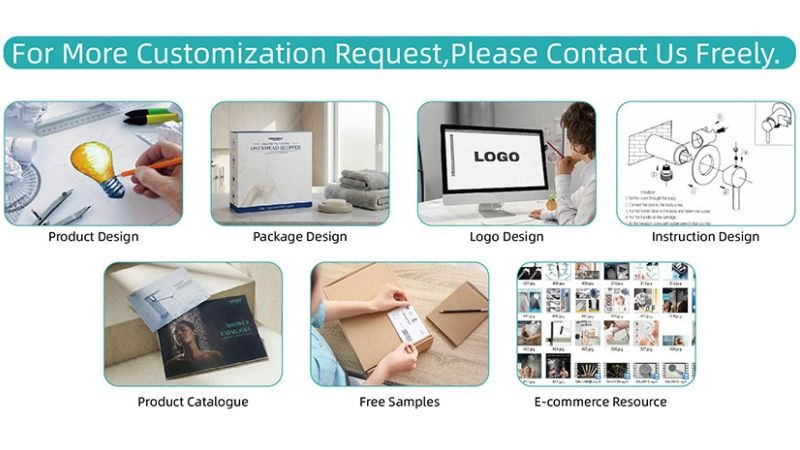
Contact Leelongs today to discuss your project, request samples, or get a customized solution tailored to your business goals. Explore how Leelongs can support your next project.